

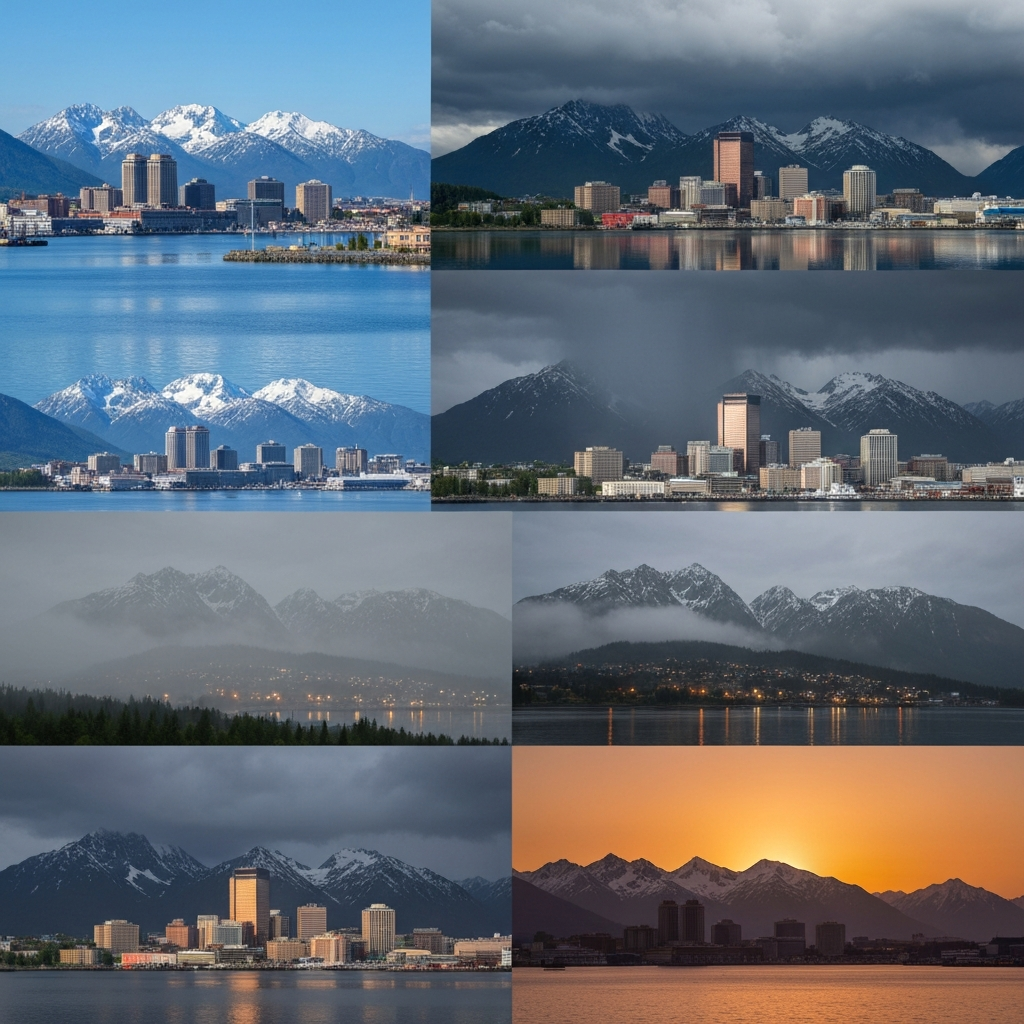
Anchorage, Alaska, offers a climate that might surprise many, characterized by its coastal subarctic conditions. Understanding these patterns is essential for both residents and visitors to make the most of what each season has to offer.
Seasonal Overview
Spring (April to May)
Spring in Anchorage brings a gradual warming trend. April sees average temperatures ranging from 30°F (-1°C) to 45°F (7°C), while May warms up to between 40°F (4°C) and 55°F (13°C). As snow melts, trails can become muddy, so waterproof footwear is advisable. The increasing daylight, reaching up to 17.6 hours by May, provides ample time for outdoor activities. Source
Summer (June to August)
Summers are mild, with temperatures typically between 50°F (10°C) and 70°F (21°C). The longest day of summer offers nearly 24 hours of daylight, allowing for extended outdoor adventures. While rainfall is relatively low, it’s wise to pack layers to adjust to varying conditions throughout the day. Source
Fall (September to October)
Autumn sees cooling temperatures, with September averaging between 45°F (7°C) and 55°F (13°C), and October ranging from 32°F (0°C) to 40°F (4°C). Rain becomes more frequent, so a waterproof coat is essential. The fall foliage provides a picturesque backdrop for outdoor activities. Source
Winter (November to March)
Winters are cold and snowy, with temperatures often dropping below freezing. November and February average between 15°F (-9°C) and 30°F (-1°C), while December and January are colder, ranging from 10°F (-12°C) to 25°F (-4°C). Snowfall is common, and daylight hours are shorter, with the shortest day in December offering about 5.5 hours of daylight. Dressing in layers and using thermal undergarments can help maintain warmth during outdoor activities. Source
Environmental Considerations
Anchorage’s climate is influenced by its coastal location and proximity to the Chugach Mountains. The city has experienced a warming trend, with average temperatures rising approximately 4°F since the 1970s. This warming has led to noticeable environmental changes, including permafrost thaw and glacier retreat. Source
Packing Tips
Regardless of the season, layering is key in Anchorage. Lightweight, moisture-wicking base layers, insulating mid-layers, and waterproof outer layers will prepare you for the city’s variable conditions. Don’t forget accessories like hats, gloves, and sturdy footwear suitable for the terrain and weather. Source
By understanding Anchorage’s unique climate and preparing accordingly, you can fully enjoy the natural beauty and outdoor opportunities this Alaskan city offers year-round.