

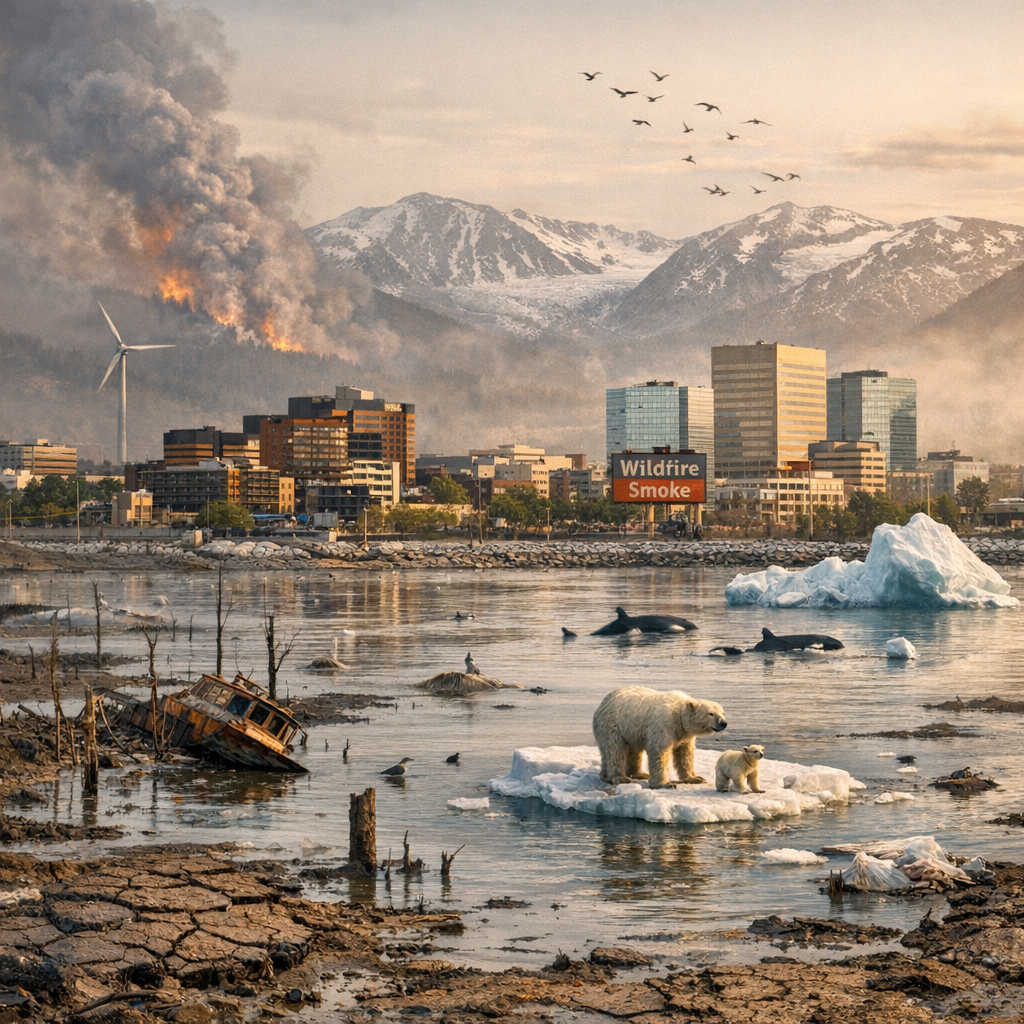
Anchorage, Alaska’s largest city, is experiencing notable shifts in its climate. Over the past few decades, average temperatures have risen approximately 4°F since the 1970s, with winter temperatures increasing even more dramatically. In July 2019, Anchorage reached 90°F for the first time in recorded history, underscoring the rapid warming trend. [Source]
Shorter Winters and Unpredictable Weather
Recent studies indicate that Anchorage’s winters have shortened by about 49 days compared to previous decades. This change is consistent with the rapid warming observed in high-latitude areas. [Source] Additionally, the city has experienced more frequent freeze-thaw cycles during winter, leading to increased wear on infrastructure and posing challenges for transportation and public safety. [Source]
Environmental Impacts
The warming climate has led to permafrost thaw, causing ground instability that affects roads, building foundations, and other infrastructure. The Alaska Department of Transportation estimates that permafrost-related damage costs the state $50–100 million annually in road repairs. [Source] Additionally, the city faces increased wildfire risks, with longer fire seasons and more frequent smoke advisories impacting air quality and public health. [Source]
Community Response
In response to these challenges, Anchorage has developed a Climate Action Plan aimed at reducing greenhouse gas emissions and preparing for the impacts of climate change. The plan focuses on various sectors, including buildings and energy, land use and transportation, and health and emergency preparedness. [Source]
Understanding these changes is crucial for residents and policymakers alike as Anchorage continues to adapt to its evolving climate.