

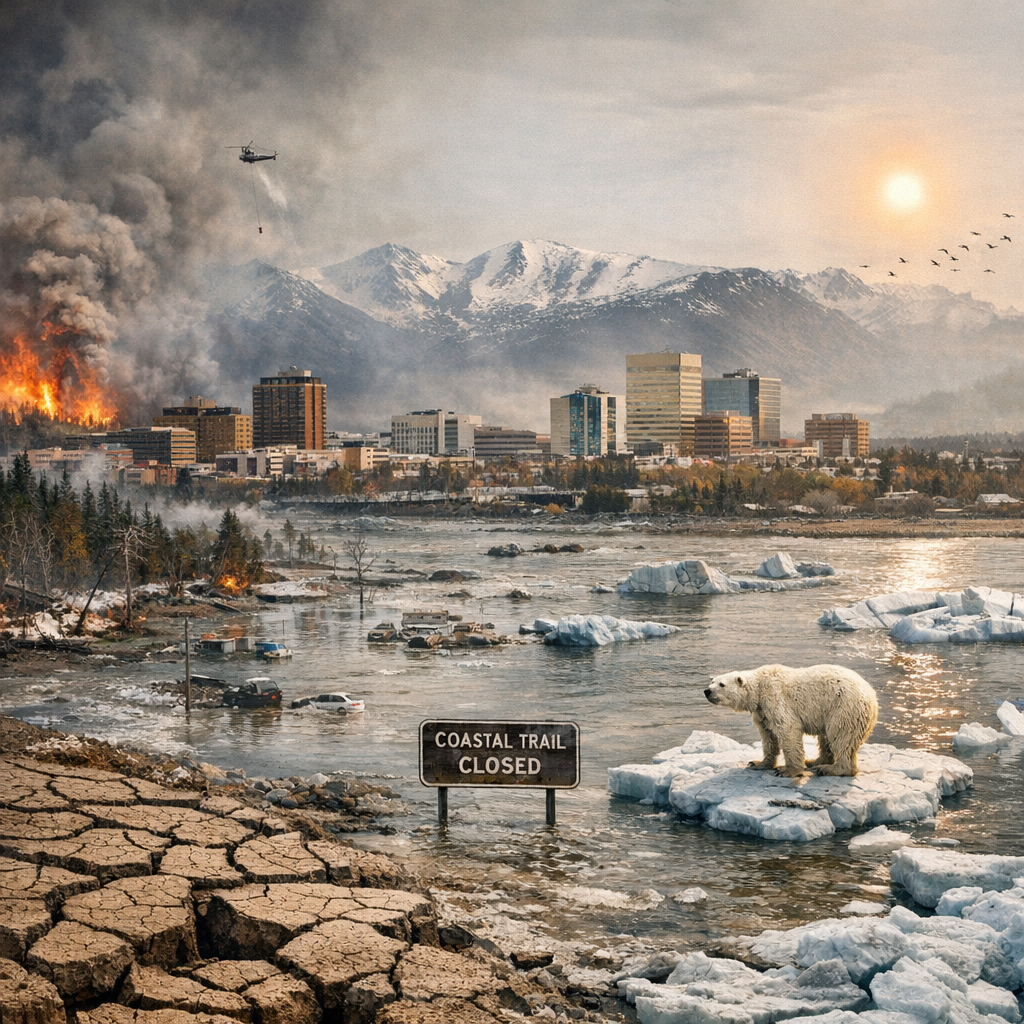
Anchorage’s climate is undergoing noticeable changes, impacting our daily lives and environment. Understanding these shifts is crucial for residents to adapt and thrive.
Warming Temperatures
Over the past few decades, Anchorage has experienced a significant rise in average temperatures. Since the 1970s, the city has warmed by approximately 4°F, with winter temperatures increasing even more dramatically. Notably, in 2019, Anchorage reached 90°F for the first time in recorded history.
Shorter Winters
Recent studies indicate that Anchorage’s winters are becoming shorter. Compared to the period from 1970 to 1997, the coldest 90-day period now starts later and ends earlier, resulting in a reduction of about 49 days. This trend aligns with rapid warming observed in high-latitude regions.
Seasonal Variations
While core winter months (December through February) have seen increased snowfall, the shoulder months (October, November, March, and April) are experiencing less snow and more rain. This shift affects outdoor activities and has implications for infrastructure and daily routines.
Environmental Impacts
The warming climate contributes to permafrost thaw, destabilizing infrastructure, and altering ecosystems. Additionally, the retreat of glaciers and changes in sea ice patterns affect local wildlife and fisheries.
Community Adaptation
Recognizing these changes, Anchorage is revising its climate action plans to address the challenges posed by a warming environment. Residents are encouraged to stay informed and participate in community efforts to build resilience against climate impacts.
By understanding and adapting to these evolving climate patterns, Anchorage can continue to thrive while preserving the unique environment that defines our community.