

As global climate patterns continue to evolve, Alaska stands at the forefront of experiencing significant environmental transformations. These changes are not only reshaping the state’s natural landscapes but also impacting its economy and the daily lives of its residents.
Rising Temperatures and Environmental Changes
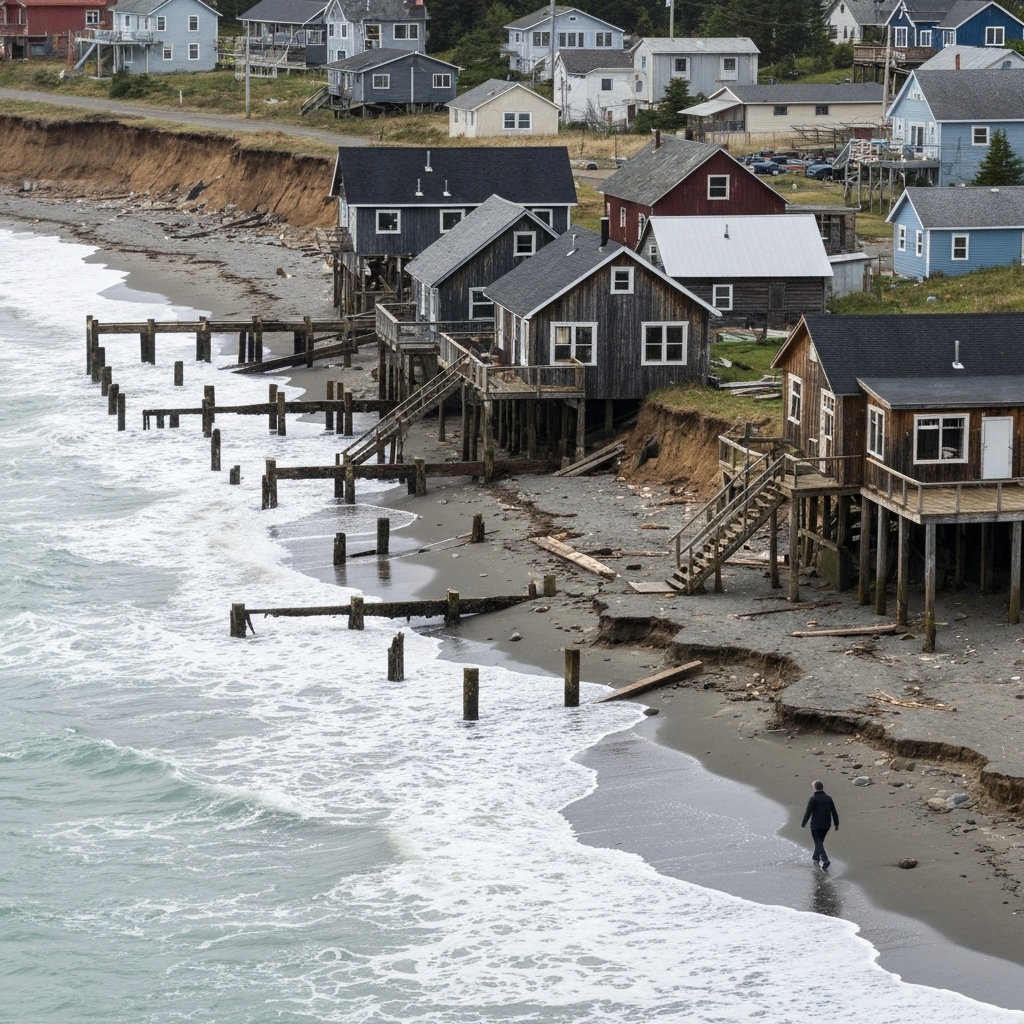
Alaska has been warming at a rate twice as fast as the rest of the United States. This rapid increase in temperature has led to the thawing of permafrost, resulting in ground instability that affects infrastructure and natural habitats. Additionally, the loss of sea ice has exposed coastal areas to more severe storms and erosion, threatening communities and wildlife habitats.
Impact on Fisheries and Food Security
The state’s fisheries, a cornerstone of Alaska’s economy and subsistence lifestyle, are facing challenges due to changing ocean temperatures and acidification. These factors have contributed to shifts in fish populations and have led to multiple fishery disaster declarations in recent years. Such disruptions not only affect commercial industries but also the food security of many Alaskan communities that rely on subsistence fishing.
Community Resilience and Adaptation
In response to these challenges, Alaskan communities are actively seeking ways to adapt and build resilience. Organizations like the Alaska World Affairs Council are fostering global dialogue and understanding, providing platforms for discussions on climate change and its local impacts.
Understanding the connection between global climate events and local changes is crucial for developing effective strategies to mitigate adverse effects and protect Alaska’s unique environment and way of life.