

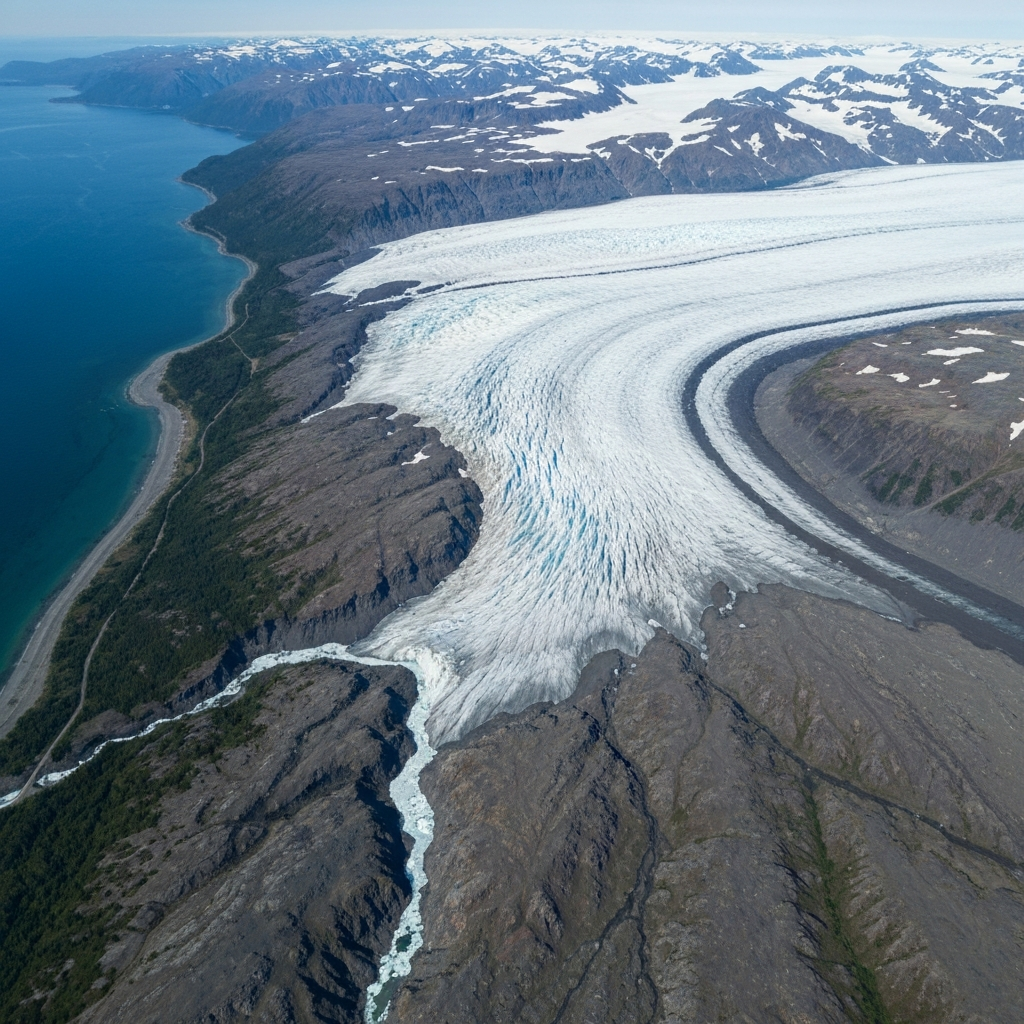
As global climate patterns continue to evolve, Alaska stands at the forefront of experiencing significant environmental transformations. The Arctic is warming over twice as fast as the global average, leading to profound changes in our state’s ecosystems and communities.
Accelerated Warming and Environmental Changes
The 2025 Arctic Report Card highlights that the past water year (October 2024–September 2025) was the warmest on record, with unprecedented autumn temperatures. This rapid warming has resulted in shorter snow seasons, accelerated melting of sea and glacier ice, and thawing permafrost. Notably, sea ice reached its lowest winter coverage in satellite record history, and glacier retreat continues, posing hazards like glacial floods and tsunamis. Additionally, thawing permafrost has led to rivers turning orange due to the release of iron and toxic metals, contaminating habitats and drinking water sources.
Increased Frequency of Extreme Weather Events
Alaska has witnessed a surge in extreme weather events, including powerful Pacific cyclones reaching higher latitudes and maintaining strength longer. For instance, the remnants of Typhoon Halong in October 2025 caused severe flooding and fatalities in several coastal villages. Such events underscore the vulnerability of our communities to global climatic shifts.
Impacts on Indigenous Communities
Alaska Native Tribal communities are on the frontlines of climate change. The Arctic regions of Alaska are warming four times faster than the global average. Remote regions of western Alaska are being hit particularly hard as unprecedented warming causes permafrost thaw, accelerating erosion, more frequent and severe flooding, sea level rise, and decreasing sea ice. These climate change impacts damage homes, public buildings, power lines, water and sewer lines, and other critical public and private infrastructure across western Alaska’s remote communities, and threaten the health and safety of residents.
Economic Implications
Global energy dynamics also influence Alaska’s economy. As the West-Russia oil conflict continues, countries have increasingly turned toward liquefied natural gas (LNG) to satisfy their energy needs. Demand for LNG doubled since the Russian invasion of Ukraine, shifting from about $5 million British thermal units in late February 2022 to about $10 million Btus in late August 2022. For decades, Alaska provided LNG to Japan, but exports declined as competition from other producers increased. In light of the oil conflict, Japan is once again interested in Alaskan LNG.
Conclusion
Alaska’s unique position makes it particularly susceptible to the cascading effects of global climate change. Understanding these impacts is crucial for developing adaptive strategies to protect our environment, communities, and economy.