

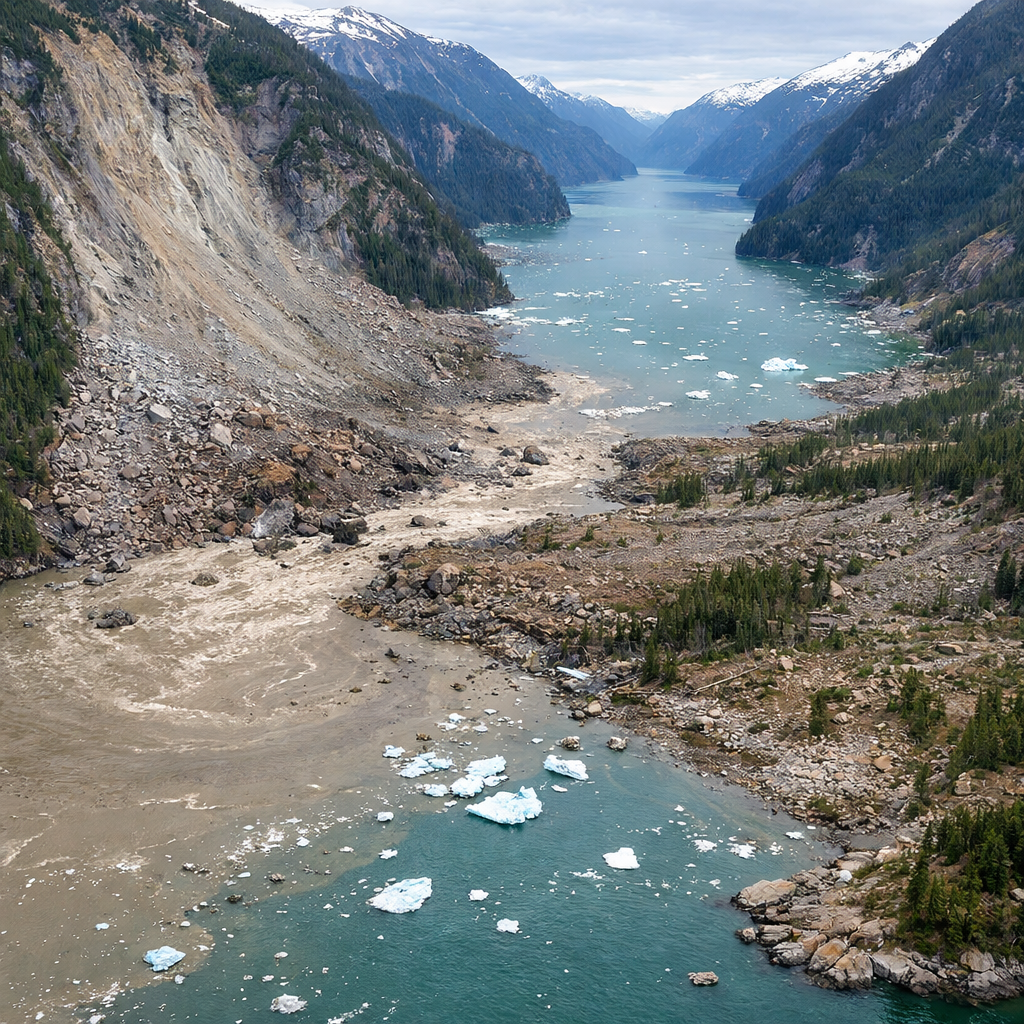
Alaska’s unique position makes it particularly susceptible to global climate events. Recent studies have highlighted several significant impacts on the state.
Record-Breaking Tsunami in Tracy Arm Fjord
In August 2025, a massive landslide in Tracy Arm fjord triggered a tsunami reaching 1,578 feet, surpassing the height of New York’s One World Trade Center. This event, one of the tallest tsunamis ever recorded, was likely influenced by retreating glaciers and intense rainfall. Fortunately, no casualties occurred as the fjord was unoccupied at the time. Researchers suggest that minor earthquakes detected before the landslide could aid in developing early warning systems.
Accelerated Arctic Warming
The 2025 Arctic Report Card indicates that the Arctic is warming over twice as fast as the global average. This rapid warming has led to shorter snow seasons, melting sea and glacier ice, and permafrost thaw. Such changes pose hazards like glacial floods and tsunamis, directly affecting Alaska’s ecosystems and communities.
Increased Wildfire Activity
By mid-September 2025, Alaska experienced wildfires that burned approximately 1.68 million acres, nearly double the 10-year average. Factors contributing to this surge include extended daylight, low humidity, and warm temperatures, all intensified by global climate patterns.
Impacts on Indigenous Communities
Alaska Native Tribal communities are on the frontlines of climate change. Accelerated warming causes permafrost thaw, leading to flooding, erosion, and infrastructure damage. These changes threaten the health and safety of residents, emphasizing the need for climate justice initiatives.
Understanding the connection between global climate events and their local impacts is crucial for developing effective mitigation and adaptation strategies in Alaska.