

Alaska’s unique position makes it particularly susceptible to the effects of global climate events. Recent studies and observations have highlighted several significant impacts on the state’s environment and communities.
Record-Breaking Tsunami in Tracy Arm Fjord
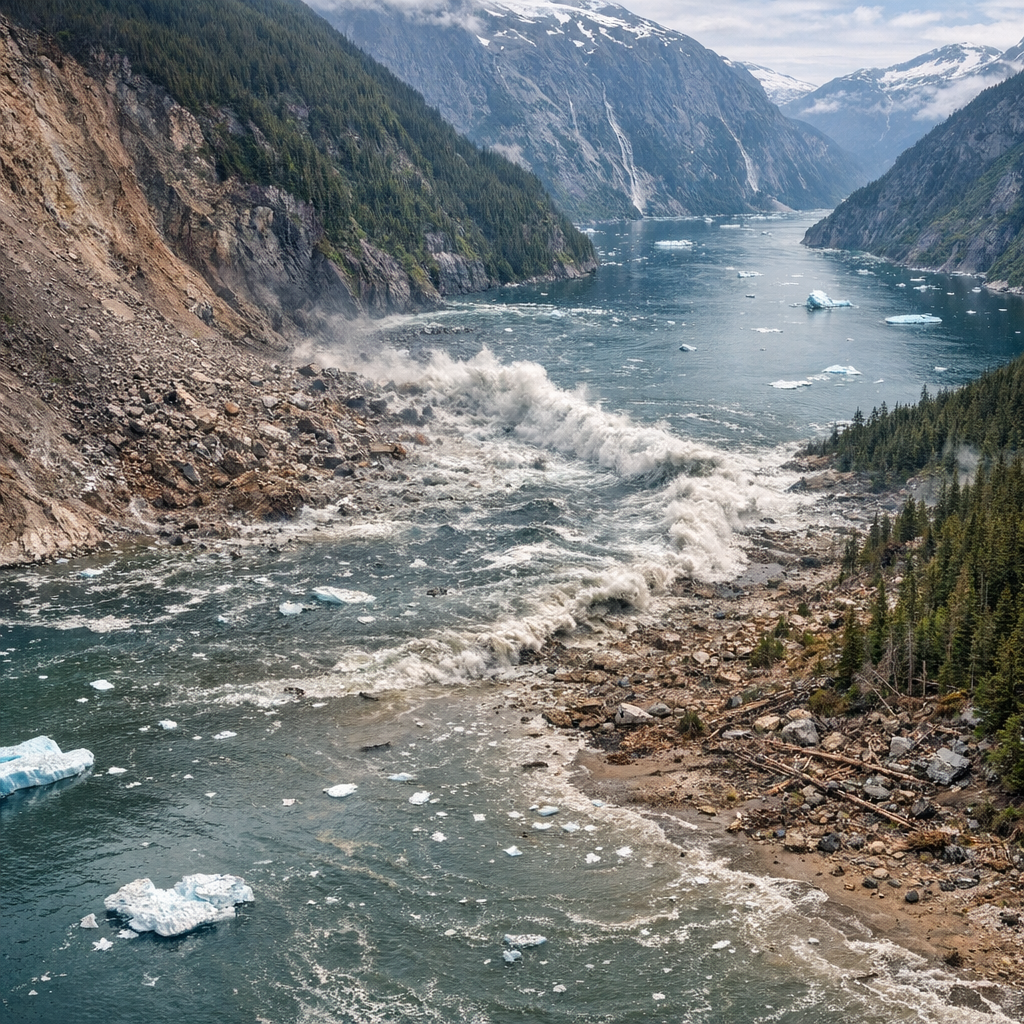
In August 2025, a massive landslide in Tracy Arm fjord triggered a tsunami that reached a height of 1,578 feet (481 meters), surpassing the height of New York’s One World Trade Center. This event, one of the tallest tsunamis ever recorded, was likely caused by retreating glaciers or intense rainfall. Fortunately, no casualties occurred as the fjord was unoccupied at the time. Researchers are now considering the development of early warning systems, as minor earthquakes were detected shortly before the landslide.
Accelerated Arctic Warming
The 2025 Arctic Report Card reveals that the Arctic is transforming more rapidly than anticipated. The past water year (October 2024–September 2025) marked the warmest on record, with the Arctic warming over twice as fast as the global average. This rapid warming has led to shorter snow seasons, melting sea and glacier ice, and permafrost thaw. Notably, thawing permafrost has turned rivers orange due to the release of iron and toxic metals, contaminating habitats and drinking water.
Increased Wildfire Activity
The 2025 wildfire season in Alaska was notably severe, with approximately 1.68 million acres burned by mid-September, roughly double the 10-year average. Extreme heat and thunderstorms across central Alaska contributed to rapid fire growth, producing heavy smoke impacts from Fairbanks to Anchorage.
Implications for Alaskan Communities
These global climate events have profound implications for Alaskan communities. The rapid environmental changes challenge traditional ways of life, particularly for Indigenous communities that rely on subsistence activities. Additionally, the increased frequency and intensity of natural disasters necessitate enhanced preparedness and adaptation strategies to protect both the environment and the people of Alaska.