

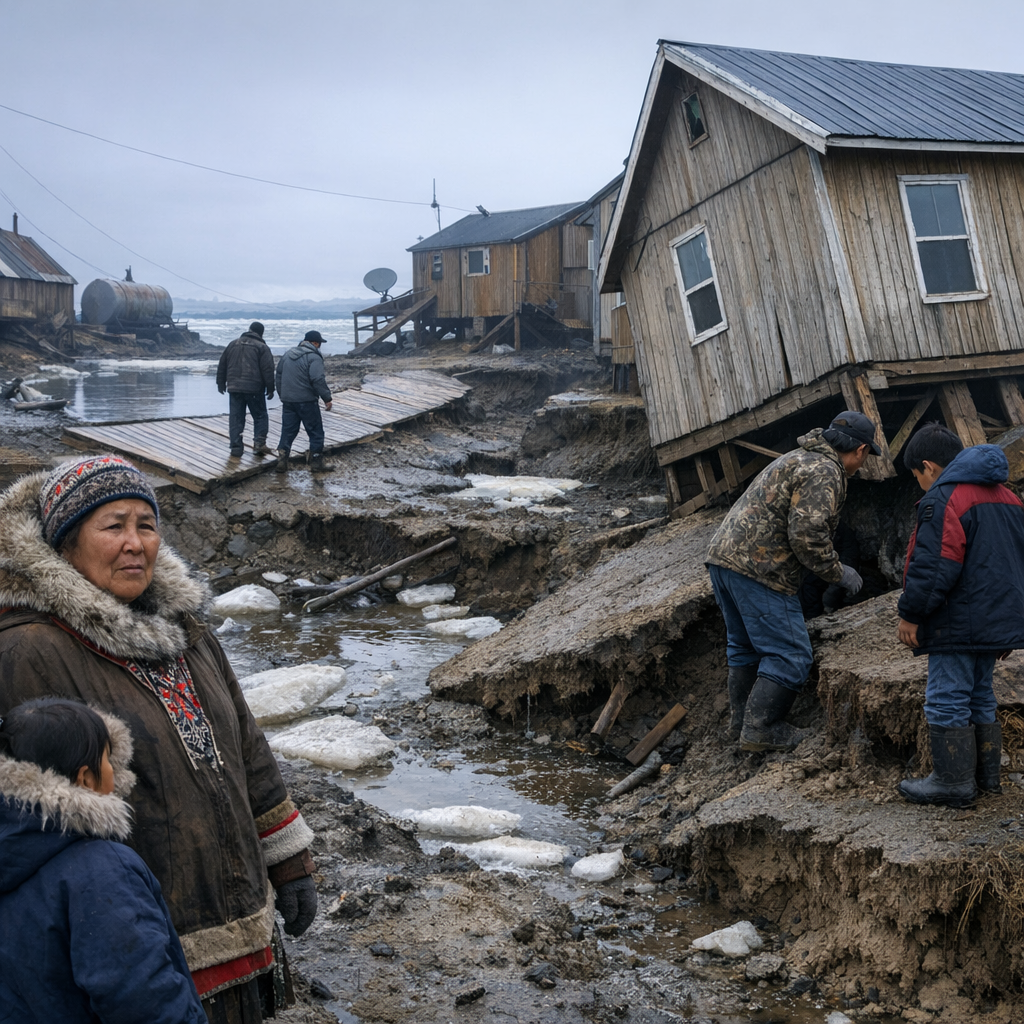
The Arctic is experiencing unprecedented warming, with temperatures rising nearly four times faster than the global average over the past four decades. This rapid change profoundly affects Indigenous communities and has significant global implications.
Impact on Indigenous Communities
For thousands of years, the Arctic has been home to vibrant Indigenous communities. Climate change now poses a direct threat to their traditional ways of life. Thawing permafrost destabilizes infrastructure, including homes and roads, while altering ecosystems disrupts subsistence hunting and fishing practices. For instance, changes in sea ice patterns affect the migration routes of marine mammals, making traditional hunting more challenging.
Global Consequences
The effects of Arctic warming extend beyond the region. Melting glaciers and ice sheets contribute to rising sea levels, posing risks to coastal communities worldwide. Additionally, the release of greenhouse gases from thawing permafrost accelerates global warming. The Arctic’s role as a global climate regulator is diminishing, leading to more extreme weather patterns across the Northern Hemisphere.
Call to Action
Addressing Arctic warming requires urgent global action to reduce greenhouse gas emissions. Indigenous knowledge and leadership are crucial in developing adaptation strategies. Collaborative efforts can help mitigate the impacts on Arctic communities and the broader global environment.