

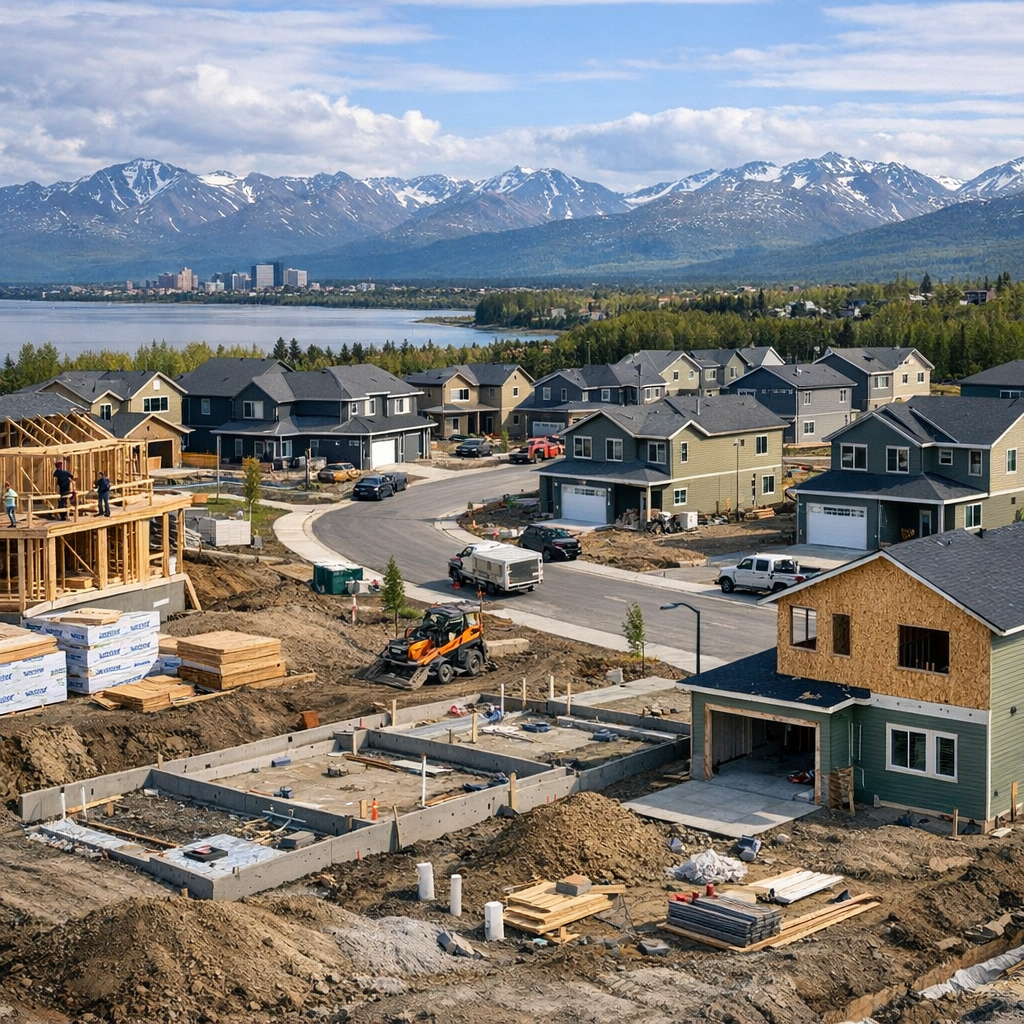
Anchorage’s real estate and housing sector shows a strong trajectory of growth. Home prices are up, new development is accelerating, and rental demand remains high—making it more crucial than ever for buyers, renters, and policymakers to understand what’s driving the market.
Home Prices & Inventory: Tightening with Rising Costs
The median sale price for homes in Anchorage is around $450,000, reflecting an annual increase. Homes are selling quickly—within days—and existing inventory is limited. Competing with new-construction homes can be tough, especially when resale homes in desirable neighborhoods are selling for substantially less but still represent strong value.
Builders in subdivisions like East Anchorage are focusing on single-family homes in the $500,000–$550,000 range, with lots of attention paid to cost, lot prep, and infrastructure delays—factors that often push up total development costs.
Rental Market: Demand Strong, Prices Mixed
Rentals remain in high demand. Anchorage’s median rent is approximately $2,000 per month, with year-over-year increases around 15%. Rental inventory remains low in many neighborhoods, especially for two-bedroom and affordable units. Rising mortgage costs are keeping many households in the rental market longer than they might want.
Still, there are signs of variability: some rents have eased slightly in certain areas, while others—especially near transit or in high-amenity locations—see continued upward pressure.
New Developments & Policy Moves
The city has launched several initiatives aimed at increasing housing supply. A major strategy is the “10,000 Homes in 10 Years” plan, which aims to deliver more diverse housing options—including mixed-income and missing-middle housing—to meet Anchorage’s growing needs.
Projects already underway include:
- The Fireweed Housing Project: multifamily workforce housing in Midtown Anchorage.
- Powder Reserve West: a large, long-term subdivision planned by Eklutna, Inc., incorporating single-family homes, duplexes, and accessory dwelling units.
- Village in the City by Chugach: a cultural, wellness, and housing campus, with its first phase expected in 2028.
- Policy and zoning efforts, such as tax incentives for first-time buyers and overlay zones that support transit-oriented and mixed use development.
Challenges & What Buyers and Renters Should Keep in Mind
Some obstacles remain large. Infrastructure costs—such as roads, sewer, and long utility runs—can add unexpected expenses to development. Also, qualifying housing projects often need subsidies or tax incentives to close affordability gaps.
For renters, search activity is strong but choices are often narrow. For buyers, high demand and rising mortgage rates mean timing and financing matter more than ever. It’s wise for prospective homebuyers to get pre-approved, work closely with knowledgeable agents, and consider emerging neighborhoods or smaller homes as entry points into the market.
Long-Term Outlook: Toward Balanced Growth
Anchorage is pushing for more balanced housing—a mix of single-family homes, duplexes, multifamily units, and affordable options—so as to serve a wider socioeconomic spectrum. Public input is being solicited around ordinances creating “missing middle” housing and mixed-use overlays. If those policies win support—and if infrastructure investment keeps pace—the city could mitigate some of its housing affordability pressures over time.
For now, housing remains a tight market. Whether buying or renting—or working to shape policy—understanding costs, being aware of development timelines, and staying informed will serve residents best in the months to come.