

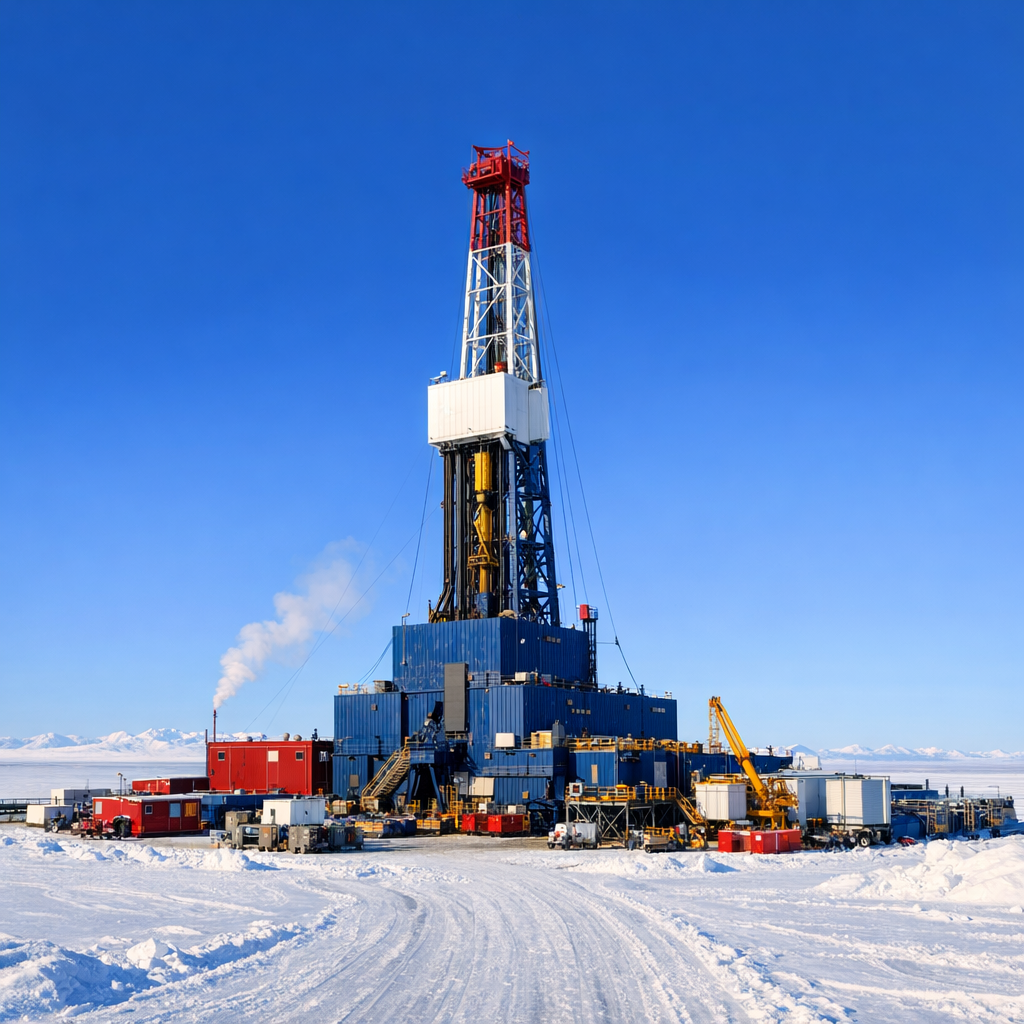
Alaska’s vast natural resources and strategic location have long positioned it as a cornerstone of the United States’ energy infrastructure and economic stability. The state’s abundant reserves of oil, natural gas, and minerals not only fuel the national economy but also play a crucial role in ensuring energy security.
Energy Production and National Impact
Alaska ranks among the top states in crude oil production, with significant contributions from the North Slope and Cook Inlet regions. In 2024, the state produced an average of 421,000 barrels of oil per day, placing it fifth among U.S. states. Additionally, Alaska’s natural gas gross withdrawals exceeded 3.5 trillion cubic feet, most of which are reinjected into oil fields to maintain production rates. These figures underscore Alaska’s integral role in meeting the nation’s energy demands. Source
Economic Contributions
Beyond energy production, Alaska’s economy benefits from substantial federal spending and a diverse range of industries, including fishing, tourism, and mining. In 2025, the state exported a record $6.7 billion in goods, supporting an estimated 27,000 jobs. This economic activity highlights Alaska’s importance not only as an energy producer but also as a key player in national and international trade. Source
Strategic Importance
Alaska’s geographic position enhances its strategic significance for national defense and energy security. The state’s proximity to the Arctic and Asia-Pacific regions makes it a critical hub for military operations and energy exports. Recent federal initiatives aim to leverage Alaska’s resource potential to bolster the nation’s economic and national security for generations to come. Source
In conclusion, Alaska’s contributions to the United States extend far beyond its borders. Its energy production, economic activities, and strategic location collectively reinforce the nation’s security and prosperity, underscoring the state’s enduring importance on the national stage.