

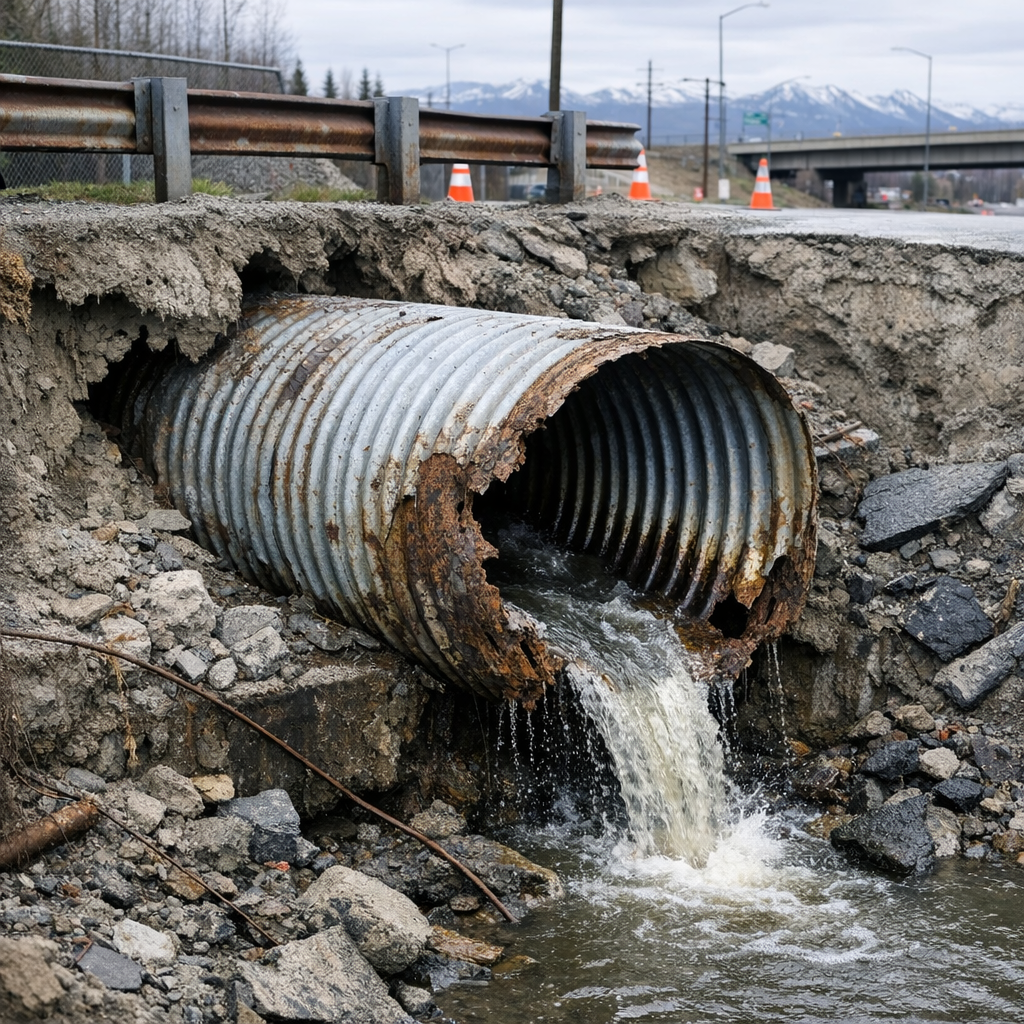
Anchorage is grappling with a significant challenge: a $1.3 billion deficit in its stormwater infrastructure. Over two-thirds of the city’s 590 miles of storm pipes are currently failing, leading to issues such as sinkholes, road damage, and flooding. This deterioration is outpacing the city’s ability to address repairs, as there is no dedicated funding source for these critical needs.
Kenan Billups, watershed manager for the Project Management & Engineering Department, highlighted the severity of the situation, noting that 400 miles of the stormwater system are in a state of failure. The current funding mechanism, which relies on annual Anchorage Roads and Drainage Service Area (ARDSA) bonds, is insufficient to keep up with the accelerating deterioration.
Assembly Member Erin Baldwin Day pointed out that Anchorage received $1 billion less from the state between 2015 and 2025 compared to the previous decade. This shortfall coincides with approximately $1 billion in deferred maintenance on city infrastructure. Baldwin Day emphasized the need for repair and maintenance, stating, “We have a lot of legacy infrastructure that we have built, roads and pipes, things that are not indefinite resources, they do not have an indefinite lifespan. And so there is a lot of repair and maintenance that is now required because the new stuff is now old stuff.”
The cost of addressing these issues is substantial. For example, replacing 4,000 feet of pipe along Constitution Drive in South Anchorage is estimated to cost between $25 to $50 million. The stormwater system operates separately from the Anchorage Water and Wastewater Utility, which manages drinking water and wastewater.
In response to this pressing issue, city officials are exploring the creation of a stormwater utility to provide a dedicated funding source for long-term solutions. Deputy Municipal Manager Mark Spafford indicated that subsequent meetings are planned to discuss different strategies, options, and recommendations to address the infrastructure deficit.
As Anchorage continues to grow and develop, addressing the stormwater infrastructure deficit is crucial to ensure the safety and well-being of its residents. Proactive measures and dedicated funding will be essential in tackling this significant challenge.