

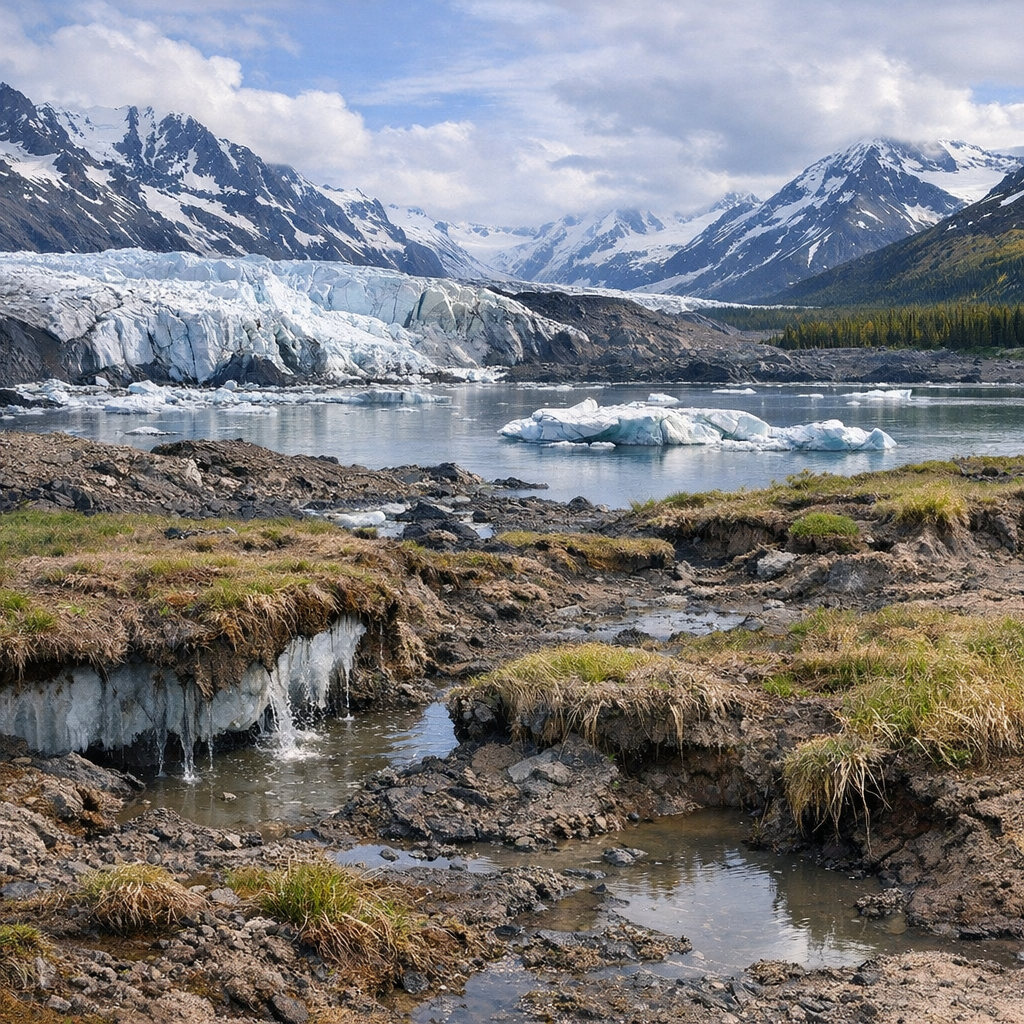
Alaska is experiencing significant transformations due to global climate shifts, affecting both its natural environment and the communities that depend on it.
Accelerated Arctic Warming
The Arctic is warming over twice as fast as the global average, leading to shorter snow seasons, rapidly melting sea and glacier ice, and permafrost thaw. This warming has resulted in record-high precipitation, drastically impacting ecosystems through changes in river flows and snow distribution. Ocean warming has intensified storms and driven ecosystem shifts, notably displacing native Arctic species.
Increased Wildfire Activity
Alaska’s wildfire season is primarily driven by its boreal forest and tundra ecosystems, which can dry rapidly during the long summer days. The core fire season generally runs from late May through early August, peaking in June and July when extended daylight, low humidity, and warm temperatures combine with lightning activity to spark large fires. Many of the state’s largest recorded wildfires have occurred during this midsummer window.
Permafrost Thaw and Infrastructure Challenges
Thawing permafrost is turning rivers orange as iron and toxic metals pollute habitats and drinking water. This phenomenon has been observed in over 200 watersheds across Arctic Alaska, leading to higher acidity and elevated levels of toxic metals, which can contaminate fish habitats and drinking water, impacting subsistence livelihoods.
Community Resilience and Adaptation
Despite these challenges, Indigenous communities are leading grassroots observation and resilience efforts. For instance, communities on St. Paul Island are actively monitoring environmental changes and developing adaptation strategies to preserve their way of life.
As global climate shifts continue to impact Alaska, it is crucial for local communities, policymakers, and scientists to collaborate on sustainable solutions to mitigate these effects and support the resilience of Alaska’s unique ecosystems and cultures.