

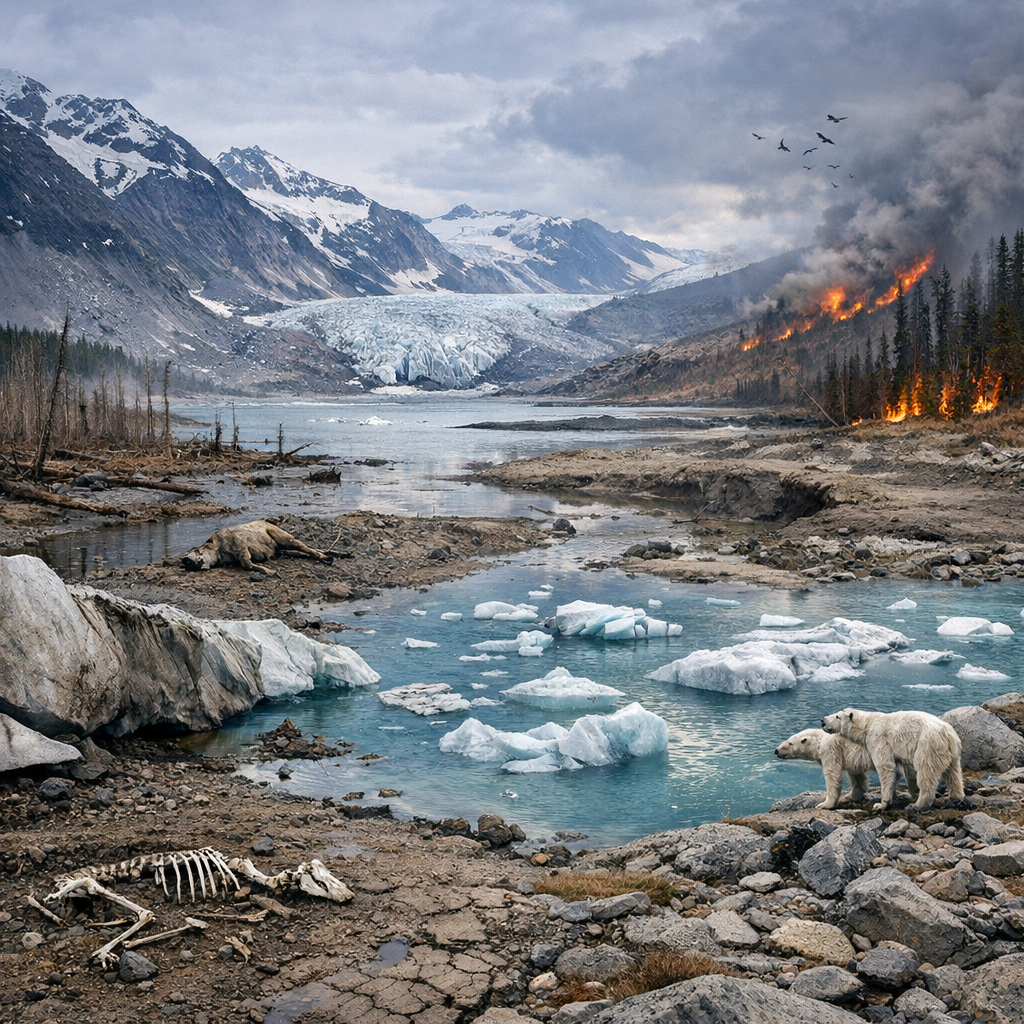
Alaska, known for its rugged landscapes and resilient communities, is experiencing significant transformations influenced by global events. These changes are reshaping the state’s environment, economy, and way of life.
Climate Change Accelerates Environmental Shifts
The Arctic is warming over twice as fast as the global average, leading to shorter snow seasons, rapidly melting sea and glacier ice, and permafrost thaw. Sea ice reached its lowest winter coverage in satellite record history, while glacier retreat and mass loss continue, posing hazards like glacial floods and tsunamis. Record-high precipitation, fueled by a warmer atmosphere, is drastically impacting ecosystems through changes in river flows and snow distribution. Ocean warming has intensified storms, including ex-typhoons, and driven ecosystem shifts. Notably, marine and terrestrial “borealization” is displacing native Arctic species. Further, thawing permafrost has turned rivers orange as iron and toxic metals pollute habitats and drinking water. Despite underfunded monitoring networks, Indigenous communities, such as those on St. Paul Island, are leading grassroots observation and resilience efforts. The report underscores the Arctic’s role in the broader global environmental crisis encompassing climate change, biodiversity loss, and pollution, highlighting urgent need for action. [Source: Space.com]
International Energy Dynamics Affecting Alaska’s Economy
Alaska produces energy for the nation and many Asian countries. Supply and demand is, in part, a function of international relations, trade policies and conflict. U.S. foreign and energy policy has significant implications for Alaska. The state’s position in national and international energy markets remains dynamic and increasingly important. Federal government decisions on oil export levels and destinations, energy bans, Chinese investment and the shipping of goods impact Alaska. As Alaska makes policy in relation to energy it must consider U.S. foreign policy. [Source: IARC]
Increased Natural Disasters Impacting Communities
Seasonal extreme weather events are also worsening in western Alaska. In the fall and winter, intense storms from the Gulf of Alaska and Bering Sea devastate communities across Alaska. Typhoon Merbok, which hit western Alaska in September 2022, was the most newsworthy example in recent years. This typhoon, which was fueled by unusually warm Pacific waters, brought winds of up to 75 mph, high waves, and storm surge of up to 10 feet above mean sea level. The typhoon was life-threatening and caused severe wind, flood, and erosion damage to properties in remote western Alaska Native communities. [Source: Alaska Climate Justice Program]
As Alaska navigates these global influences, the resilience and adaptability of its communities remain crucial. Understanding and addressing these challenges will be key to ensuring a sustainable future for the state.