

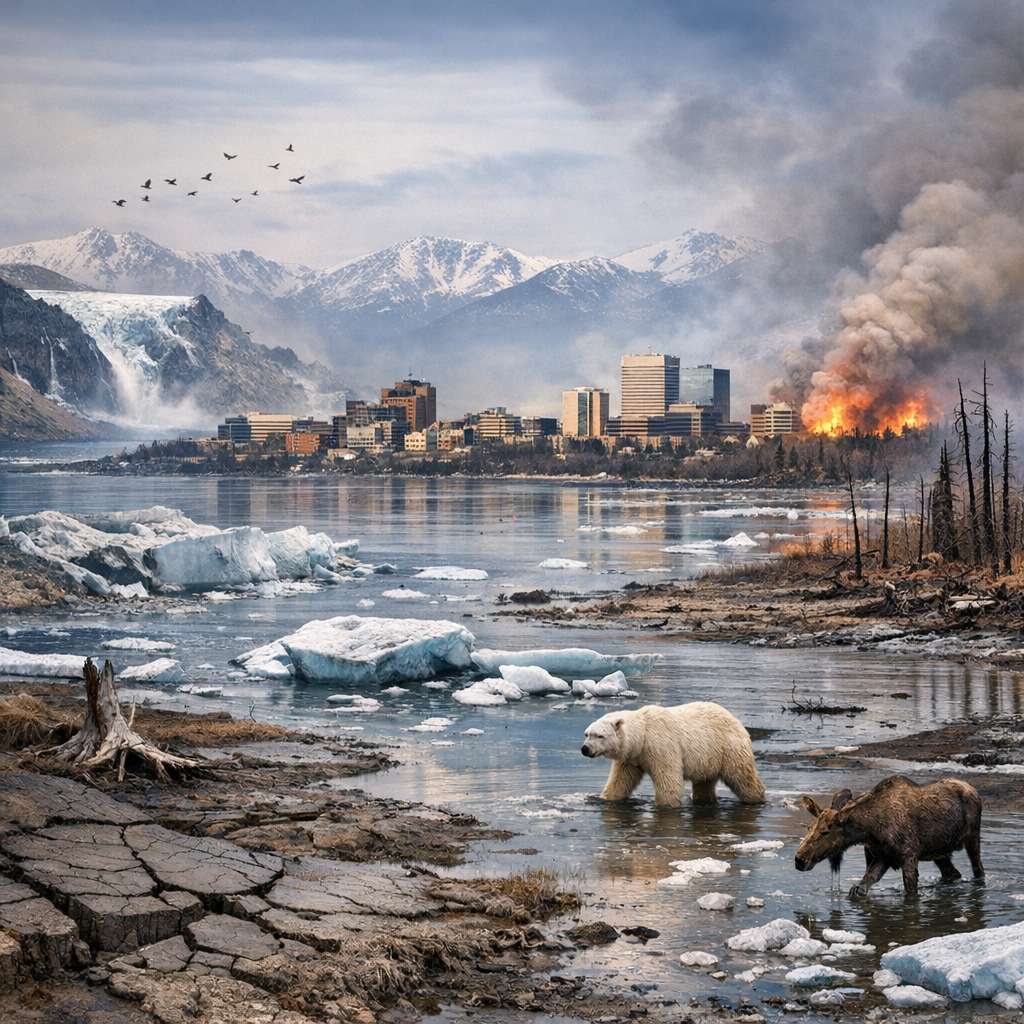
Anchorage, Alaska’s largest city, is experiencing notable climate changes that are reshaping its environment and daily life. Over the past few decades, the city has seen a significant rise in average temperatures, with an increase of approximately 4°F since the 1970s. This warming trend has led to more frequent freeze-thaw cycles during winter, causing increased wear on roads and building infrastructure. Additionally, the city has observed a shift in precipitation patterns, with more rain falling during the traditionally snowy months, impacting winter recreation activities and increasing the risk of erosion and flooding.
These environmental shifts have prompted Anchorage to take proactive measures. In 2019, the city adopted the Anchorage Climate Action Plan, aiming to reduce greenhouse gas emissions and enhance community resilience. The plan outlines strategies across various sectors, including buildings and energy, transportation, and health, to address the multifaceted challenges posed by climate change. Community engagement has been a cornerstone of these efforts, with initiatives like the SEED Lab’s ‘Cloud Chamber’ art installation sparking conversations about climate change through illuminated images projected onto downtown buildings.
As Anchorage continues to navigate these environmental changes, the collective efforts of residents, local government, and organizations remain crucial in building a resilient and sustainable future for the community.