

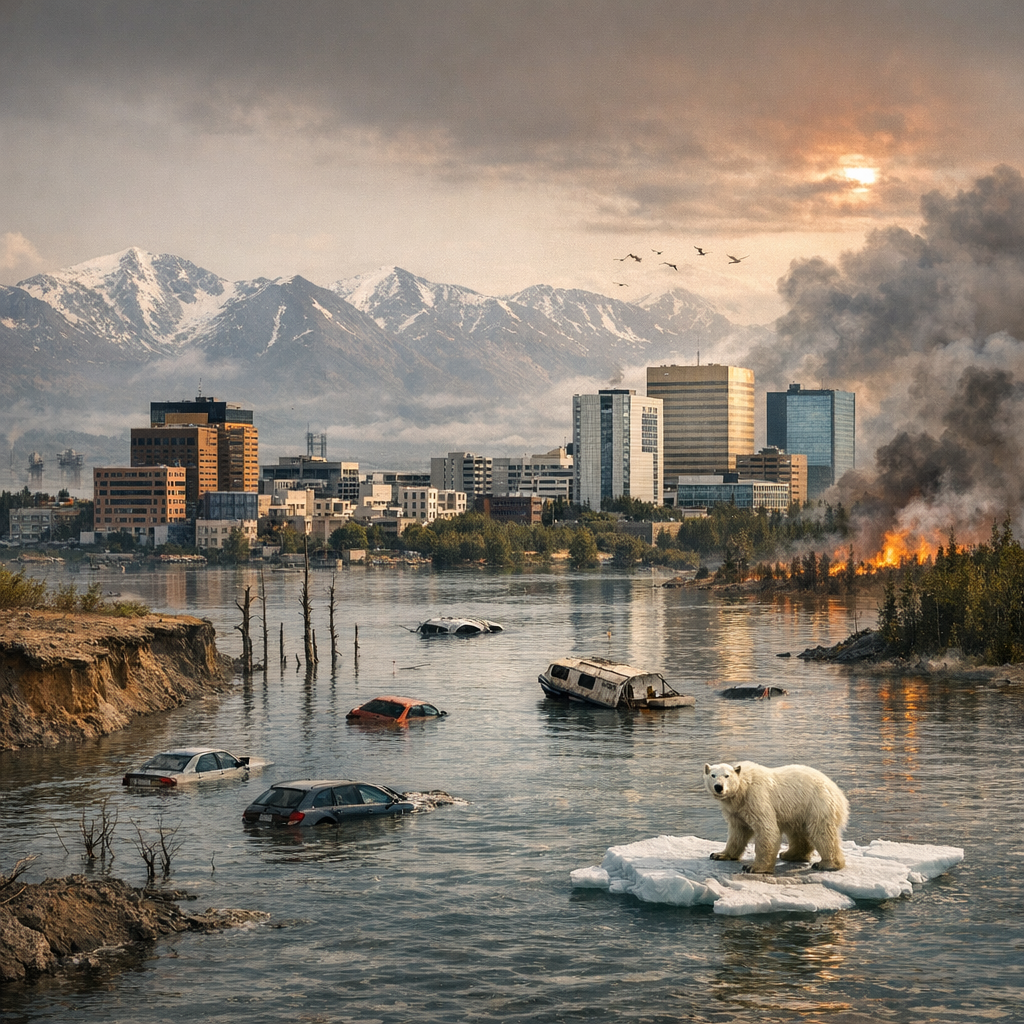
Anchorage, Alaska’s largest city, is experiencing significant climatic changes that are reshaping its environment and daily life. Understanding these shifts is crucial for residents and policymakers alike.
Rapid Temperature Increases
Since the 1970s, Anchorage’s average temperatures have risen approximately 4°F, with winter temperatures increasing even more dramatically. Notably, the city reached 90°F for the first time in recorded history during the 2019 heat wave. This warming trend is consistent with Alaska’s overall pattern, as the state is warming at twice the global average rate. Source
Shortening Winters
Recent studies indicate that Anchorage’s winters have shortened by approximately 49 days compared to previous decades. This reduction affects various aspects of life, from winter sports to infrastructure maintenance. Source
Permafrost Thaw and Infrastructure Challenges
Thawing permafrost is causing ground instability, leading to damage in roads, building foundations, and water lines. The Alaska Department of Transportation estimates that permafrost-related damage costs the state $50–100 million annually in road repairs. Areas like Anchorage’s Hillside and Government Hill neighborhoods have experienced slope instability exacerbated by freeze-thaw cycles and thawing permafrost. Source
Increased Wildfire Risks
Warmer temperatures and drier conditions have lengthened Alaska’s wildfire season by 40 days since the 1980s, with the area burned annually doubling. Anchorage’s proximity to boreal forests with heavy fuel loads elevates the risk of wildfires, which can lead to hazardous air quality and health concerns. Source
Community Response
In response to these challenges, Anchorage has developed a Climate Action Plan focusing on reducing greenhouse gas emissions and preparing for climate impacts. The plan emphasizes actions that offer environmental and community benefits, such as improving equity, economic prosperity, environmental quality, and public health. Source
As Anchorage continues to adapt to its changing climate, staying informed and proactive will be essential for building a resilient community.